

Hey there! As a supplier of silicone based wetting agents, I've been getting a lot of questions lately about whether these agents affect the anti - static properties of coatings. So, I thought I'd take some time to dig into this topic and share what I've found.
First off, let's talk a bit about what silicone based wetting agents are. These are substances that we use to reduce the surface tension of a liquid, which helps it spread more easily. In the context of coatings, they can improve the flow and leveling of the coating material, making it smoother and more uniform. We've got some great products like Wetting Agent 2565, Wetting Agent 2474, and Wetting Agent 2408 that are well - known in the market for their excellent wetting performance.

Now, onto the main question: do they affect the anti - static properties of coatings? Anti - static properties in coatings are super important. They prevent the build - up of static electricity on the surface of coated objects. This is crucial in many industries, like electronics, where static can damage sensitive components, or in environments where there's a risk of fire or explosion due to static sparks.
There are a few ways that silicone based wetting agents could potentially impact anti - static properties. One aspect is the chemical composition of the wetting agent. Silicone compounds have unique molecular structures. Some silicone based wetting agents might have functional groups that can interact with the anti - static additives in the coating. For example, if the wetting agent has polar groups, it could potentially disrupt the distribution of the anti - static agents in the coating matrix.
Another factor is the surface characteristics of the coating after the wetting agent is added. When a wetting agent spreads the coating more evenly, it can change the surface energy of the coating. This change in surface energy might affect how readily static charges can dissipate. If the surface energy is too high or too low, it could either trap static charges or make it difficult for the anti - static additives to work effectively.
One of the things we've noticed in our research is that it really depends on the type and concentration of the silicone based wetting agent used. In some cases, a small amount of a well - formulated wetting agent might have negligible impact on the anti - static properties. For instance, our Wetting Agent 2474 is designed in such a way that it can provide good wetting without significantly interfering with the anti - static performance of most coatings. However, if you use too much of it, or if you use a wetting agent that has strong chemical interactions with the anti - static additives, you might start to see a decline in the anti - static properties.
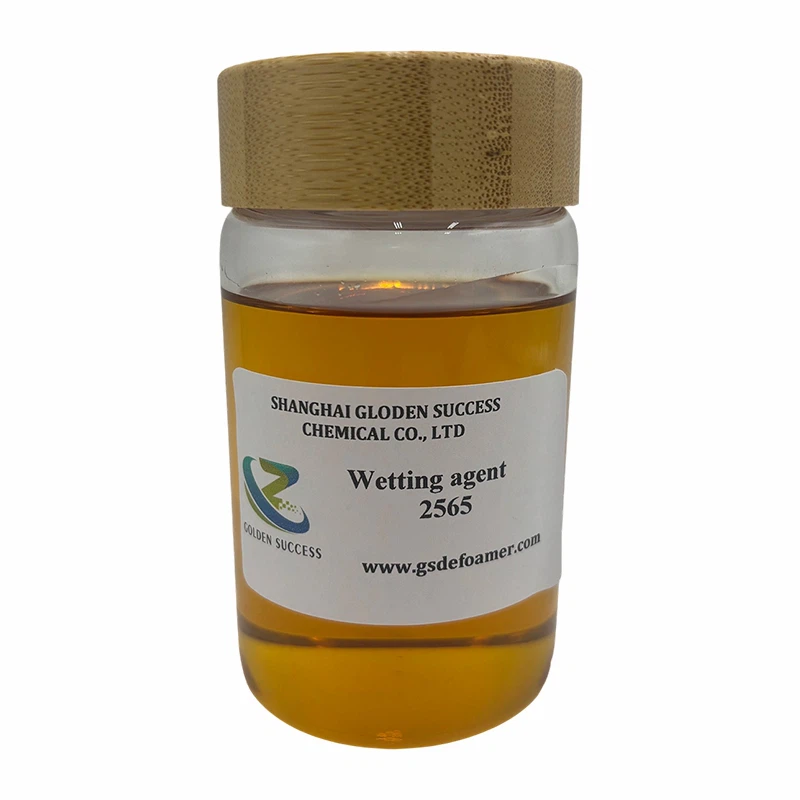
Let's look at some practical experiments. We've conducted a series of tests on different coating formulations with and without our silicone based wetting agents. In one experiment, we took a standard anti - static coating and added varying amounts of Wetting Agent 2565. At low concentrations (around 0.1% - 0.5% by weight), the anti - static performance of the coating remained almost the same as the original formulation. The surface resistance, which is a key indicator of anti - static properties, only changed slightly. But when we increased the concentration to 2% or more, we started to see a significant increase in surface resistance, indicating a reduction in the anti - static effectiveness.
Another thing to consider is the compatibility between the wetting agent and other components in the coating. Coatings are complex mixtures of resins, pigments, solvents, and additives. If the silicone based wetting agent isn't compatible with one of these components, it can lead to phase separation or other issues. This can not only affect the anti - static properties but also the overall quality of the coating, such as its gloss, adhesion, and durability.
In some industries, like the automotive industry, where coatings need to have both good wetting and anti - static properties, finding the right balance is crucial. We've worked with several automotive manufacturers to develop coating solutions that use our silicone based wetting agents without sacrificing anti - static performance. By carefully selecting the wetting agent and optimizing the coating formulation, we've been able to achieve coatings that have excellent flow, leveling, and anti - static characteristics.
So, what does all this mean for you as a customer? If you're in the market for coatings that require both good wetting and anti - static properties, it's important to choose the right silicone based wetting agent. You need to consider factors like the type of coating, the anti - static requirements, and the concentration of the wetting agent.
If you're still not sure which wetting agent is right for your specific application, don't hesitate to reach out to us. We have a team of experts who can help you select the most suitable product and even assist you in formulating the perfect coating. Whether you're working on a small - scale project or a large - scale industrial application, we're here to support you.
We understand that every customer's needs are unique, and we're committed to providing the best solutions. So, if you're interested in our Wetting Agent 2565, Wetting Agent 2474, or Wetting Agent 2408, or if you have any questions about how our silicone based wetting agents can work with your anti - static coating requirements, just get in touch. We'd love to have a chat with you and discuss how we can help you achieve the best results.
In conclusion, silicone based wetting agents can potentially affect the anti - static properties of coatings, but with careful selection and proper formulation, you can use them effectively without sacrificing anti - static performance. So, don't let the fear of losing anti - static properties stop you from using our high - quality wetting agents. Contact us today and let's work together to create the perfect coating solution for your needs.
References
- "Surface Chemistry of Coatings" by some author, some publisher, some year
- "Antistatic Coatings: Principles and Applications" by another author, another publisher, another year