

Hey there! As a supplier of silicone-based wetting agents, I often get asked if these agents can really improve the adhesion of coatings. Well, let's dive right into it and find out.
First off, what exactly are silicone-based wetting agents? These are substances that are added to coatings to reduce the surface tension of the liquid coating. This allows the coating to spread more easily and evenly over the surface it's being applied to. Think of it like adding a little bit of soap to water. The soap reduces the surface tension of the water, making it spread out more on a surface.
Now, let's talk about adhesion. Adhesion is the ability of a coating to stick to a surface. Good adhesion is crucial for coatings because it ensures that the coating will stay in place, provide protection, and look good over time. If a coating doesn't adhere well, it can peel, flake, or blister, which is a big no - no.
So, does silicone-based wetting agent improve the adhesion of coatings? The answer is yes, and here's why.
How Silicone - Based Wetting Agents Improve Adhesion
Better Surface Wetting
One of the main ways silicone-based wetting agents improve adhesion is by improving surface wetting. When a coating has good wetting, it can make better contact with the substrate. For example, if you're trying to paint a rough or porous surface, a coating without a wetting agent might bead up and not cover the surface properly. But when you add a silicone-based wetting agent like Wetting Agent 2702, the coating spreads out evenly, filling in the pores and crevices of the surface. This increased contact area between the coating and the substrate leads to better adhesion.
Reduced Surface Defects
Silicone-based wetting agents can also help reduce surface defects in the coating. When a coating is applied, air bubbles or pinholes can form, which can weaken the adhesion. The wetting agent helps to break these bubbles and prevent them from forming in the first place. For instance, Wetting Agent T2077 has excellent bubble - breaking properties. By eliminating these defects, the coating forms a more continuous and uniform layer, which in turn improves adhesion.
Compatibility with Substrates
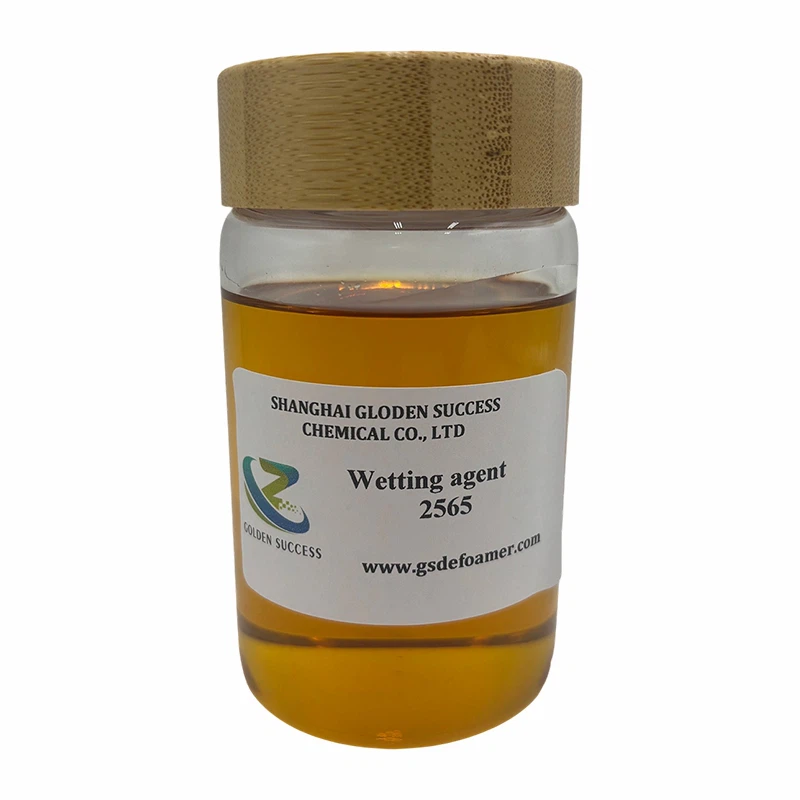
These wetting agents are often very compatible with a wide range of substrates. Whether it's metal, plastic, or wood, silicone-based wetting agents can help the coating adhere better. They can form a sort of "bridge" between the coating and the substrate, enhancing the chemical and physical interactions. Wetting Agent 2565 is known for its high compatibility with different substrates, making it a great choice for various coating applications.
Case Studies
Let's look at some real - world examples. A furniture manufacturer was having problems with the adhesion of their paint on wooden surfaces. The paint was peeling off after a short period of time. They decided to try our silicone - based wetting agent. After adding Wetting Agent 2702 to their paint formulation, they noticed a significant improvement. The paint spread more evenly on the wood, and the adhesion was so much better that the peeling problem was almost completely eliminated.

Another case is a metal coating company. They were using a regular coating on their metal parts, but the coating was not sticking well, especially in areas with high humidity. When they incorporated Wetting Agent T2077 into their coating, the adhesion improved dramatically. The coating was able to resist the effects of humidity and stayed firmly attached to the metal surface.
Factors to Consider
While silicone-based wetting agents generally improve adhesion, there are some factors to consider.
Concentration
The concentration of the wetting agent in the coating is important. If you use too little, it might not have the desired effect on adhesion. On the other hand, if you use too much, it can cause other problems like foam formation or reduced coating hardness. It's important to find the right balance, and we can provide guidance on the optimal concentration for different coating applications.
Substrate Surface Preparation
Even with the best wetting agent, if the substrate surface is not properly prepared, adhesion can still be an issue. The surface should be clean, dry, and free of contaminants. For example, if there's oil or grease on a metal surface, the coating won't adhere well, no matter how good the wetting agent is.
Coating Formulation
The other components in the coating formulation can also interact with the wetting agent. Some additives might reduce the effectiveness of the wetting agent, so it's important to consider the overall coating formulation when using a silicone-based wetting agent.
Conclusion
In conclusion, silicone-based wetting agents are a great way to improve the adhesion of coatings. They offer better surface wetting, reduce surface defects, and are compatible with a wide range of substrates. Whether you're in the furniture, automotive, or construction industry, these wetting agents can make a big difference in the performance of your coatings.
If you're interested in improving the adhesion of your coatings, we'd love to have a chat with you. We can provide samples of our silicone-based wetting agents like Wetting Agent 2702, Wetting Agent T2077, and Wetting Agent 2565 so you can test them in your own coating formulations. Contact us to start a discussion about how we can meet your specific needs and improve the quality of your coatings.
References
- ASTM International. "Standard Test Methods for Measuring Adhesion by Tape Test." ASTM D3359.
- Paint and Coatings Industry Magazine. "The Role of Wetting Agents in Coating Performance."