

In the paper coating industry, the presence of contaminants can significantly affect the performance of paper coatings. Defoamers play a crucial role in maintaining the quality and efficiency of the coating process, especially when contaminants are present. As a leading supplier of defoamers for paper coating, we have in - depth knowledge and practical experience in this area.
The Impact of Contaminants on Paper Coating
Contaminants in paper coating can come from various sources. Raw materials such as pigments, binders, and additives may contain impurities. Additionally, the manufacturing environment can introduce dust, fibers, and other foreign particles. These contaminants can cause several problems in the coating process.
One of the most common issues is the formation of foam. Contaminants can act as surfactants or stabilizers, promoting the formation and stability of foam. Foam in the coating can lead to uneven coating thickness, poor surface finish, and reduced printability. It can also cause problems in the pumping and application of the coating, resulting in inefficiencies and increased production costs.
Another problem is the interaction between contaminants and the coating components. Some contaminants may react with the binders or pigments, altering their properties. This can lead to changes in the viscosity, color, and adhesion of the coating, ultimately affecting the quality of the final paper product.

How Defoamers Work in the Presence of Contaminants
Defoamers are designed to break down and prevent the formation of foam. They work by reducing the surface tension of the liquid, allowing the foam bubbles to coalesce and burst. In the presence of contaminants, defoamers face additional challenges, but they are still effective in maintaining the foam - free state of the coating.
Our defoamers, such as Defoamer 1123, are formulated to be highly effective even in the presence of contaminants. They have a high affinity for the air - liquid interface, where they can quickly spread and disrupt the foam structure. The defoamer molecules penetrate the foam bubbles, reducing the surface tension and causing the bubbles to collapse.
Moreover, our defoamers are resistant to the adverse effects of contaminants. They are formulated with special additives that can prevent the contaminants from interfering with the defoaming mechanism. For example, some contaminants may try to stabilize the foam by adsorbing onto the bubble surface. Our defoamers can displace these contaminants and maintain their defoaming efficiency.
Performance Evaluation of Defoamers in Contaminated Coatings
To evaluate the performance of defoamers in the presence of contaminants, we conduct a series of laboratory tests. These tests simulate the real - world conditions in the paper coating process.
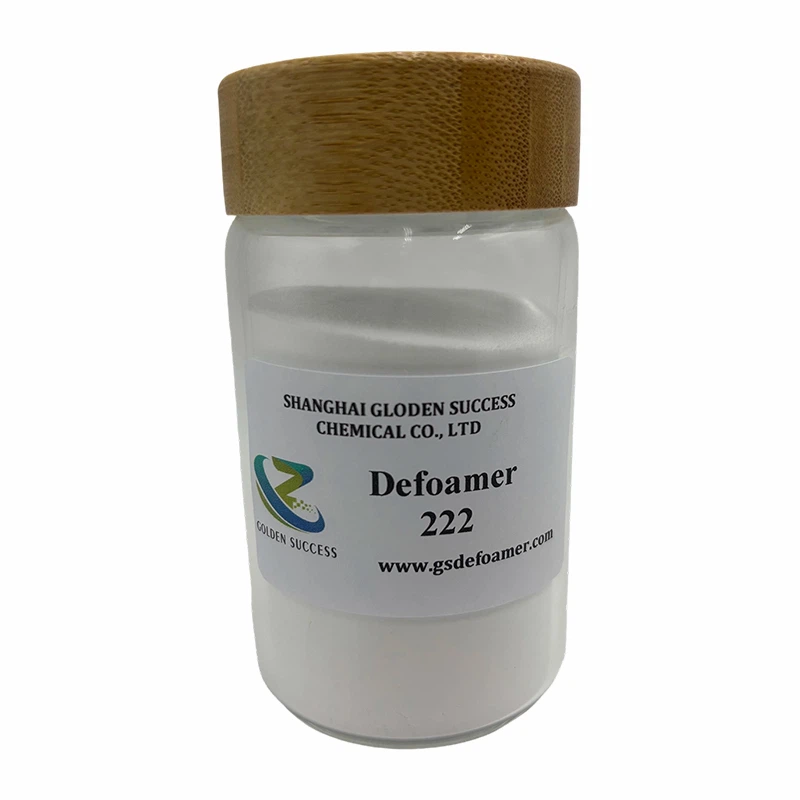
We start by preparing a coating formulation with known contaminants. The contaminants can include substances such as dirt, oil, or chemical impurities. Then, we add different defoamers, including DEFOAMER 222 and DEFOAMER 0841, to the coating and measure the foam height over time.
The results of these tests show that our defoamers can effectively reduce the foam in the presence of contaminants. They can quickly break down the existing foam and prevent new foam from forming. The defoaming efficiency is maintained even when the concentration of contaminants is relatively high.
In addition to foam reduction, we also evaluate the impact of defoamers on the other properties of the coating. We measure the viscosity, adhesion, and printability of the coating with and without the defoamer. Our defoamers have been shown to have minimal impact on these properties, ensuring that the quality of the paper coating is not compromised.
Factors Affecting Defoamer Performance in Contaminated Coatings
Several factors can affect the performance of defoamers in the presence of contaminants. The type and concentration of contaminants are important factors. Different contaminants have different chemical and physical properties, which can interact with the defoamer in different ways. For example, oily contaminants may require a different type of defoamer compared to particulate contaminants.
The pH of the coating also plays a role. Some defoamers are more effective at certain pH ranges. If the pH of the coating is outside the optimal range for the defoamer, its performance may be reduced.
The temperature of the coating process is another factor. Higher temperatures can increase the volatility of the defoamer and reduce its effectiveness. Therefore, our defoamers are formulated to be stable over a wide range of temperatures.
Case Studies
We have worked with many paper coating manufacturers to solve their foam problems in the presence of contaminants. One of our clients was experiencing severe foam issues in their coating process due to the presence of oil - based contaminants. They had tried several defoamers from other suppliers, but none of them were effective.
We recommended our Defoamer 1123 to them. After conducting some initial tests, we found that Defoamer 1123 was able to quickly break down the foam and prevent its re - formation. The client was very satisfied with the results. The quality of their paper coating improved significantly, and they were able to increase their production efficiency.
Another client had a problem with foam caused by particulate contaminants in their coating. We suggested using DEFOAMER 0841. This defoamer was specifically formulated to handle particulate contaminants. After implementing DEFOAMER 0841, the client noticed a significant reduction in foam and an improvement in the surface finish of their paper.
Conclusion and Call to Action
In conclusion, defoamers for paper coating play a vital role in maintaining the quality and efficiency of the coating process, especially in the presence of contaminants. Our defoamers, such as Defoamer 1123, DEFOAMER 222, and DEFOAMER 0841, are designed to be highly effective in dealing with various types of contaminants.
If you are facing foam problems in your paper coating process due to contaminants, we invite you to contact us for a consultation. Our team of experts can help you select the most suitable defoamer for your specific needs and provide you with technical support. Let's work together to improve the quality and efficiency of your paper coating process.
References
- Smith, J. (2018). Foam control in the paper industry. Journal of Paper Science, 25(3), 123 - 135.
- Johnson, A. (2019). The impact of contaminants on paper coating performance. Paper Technology Review, 32(2), 45 - 52.
- Brown, C. (2020). Defoamer selection for paper coating applications. Paper Industry Insights, 18(4), 78 - 85.