

Hey there! As a supplier of oil-based dispersing agents, I've seen firsthand how these little wonders can make a huge difference in the world of nanomaterials. So, let's dive into how oil-based dispersing agents affect the dispersion stability of nanomaterials.
What are Nanomaterials and Why Do We Need Good Dispersion?
Nanomaterials are materials with at least one dimension in the nanoscale range (1 - 100 nanometers). They have some pretty amazing properties, like high surface area, unique optical and electrical properties, and enhanced reactivity. But here's the catch: nanomaterials tend to clump together. This clumping, or agglomeration, can mess up their properties and make them less effective.

For example, in the field of nanocomposites, where nanomaterials are mixed with polymers to create stronger and lighter materials, poor dispersion can lead to weak spots in the composite. In coatings, poorly dispersed nanomaterials can cause uneven surfaces and reduced performance. So, getting good dispersion is crucial.
How Oil-Based Dispersing Agents Work
Oil-based dispersing agents are like the superheroes of the nanomaterial world. They work in a few different ways to keep those nanomaterials from clumping.
First off, they use steric hindrance. Picture it like a bunch of tiny bodyguards around each nanomaterial particle. The dispersing agent molecules attach to the surface of the nanomaterial and form a layer. This layer creates a physical barrier that stops other particles from getting too close and sticking together.
Secondly, they can change the surface charge of the nanomaterials. Many nanomaterials have a natural surface charge, and sometimes this charge can cause them to attract each other. Oil-based dispersing agents can modify this charge, making the particles repel each other instead. This electrostatic repulsion helps keep the particles evenly spread out in the oil-based medium.
Factors Affecting Dispersion Stability
There are a few factors that can influence how well an oil-based dispersing agent works to maintain dispersion stability.
Concentration of the Dispersing Agent: You can't just throw in any amount of dispersing agent and expect it to work. If the concentration is too low, there won't be enough molecules to coat all the nanomaterial particles, and agglomeration can still occur. On the other hand, if the concentration is too high, it can cause other problems, like increased viscosity and potential phase separation.
Type of Nanomaterial: Different nanomaterials have different surface properties. For example, carbon nanotubes have a very different surface compared to metal oxide nanoparticles. The dispersing agent needs to be compatible with the specific nanomaterial to work effectively. Some nanomaterials may require a specific type of dispersing agent with certain functional groups to achieve good dispersion.
Oil Medium: The type of oil used as the medium also matters. Different oils have different viscosities, polarities, and chemical properties. A dispersing agent that works well in one type of oil may not work as well in another. For instance, a dispersing agent designed for a non - polar oil may not be effective in a polar oil.
Our Oil-Based Dispersing Agents
We offer a range of high - quality oil-based dispersing agents, such as Dispersing Agent 9243, Dispersing Agent 9361, and Dispersing Agent 9553. These agents are formulated to provide excellent dispersion stability for a variety of nanomaterials in different oil media.
Dispersing Agent 9243 is great for carbon - based nanomaterials. It has a unique combination of functional groups that can effectively attach to the surface of carbon nanotubes and graphene, providing strong steric hindrance and electrostatic repulsion.
Dispersing Agent 9361 is designed for metal oxide nanoparticles. It can modify the surface charge of these nanoparticles, preventing them from agglomerating in oil - based systems.
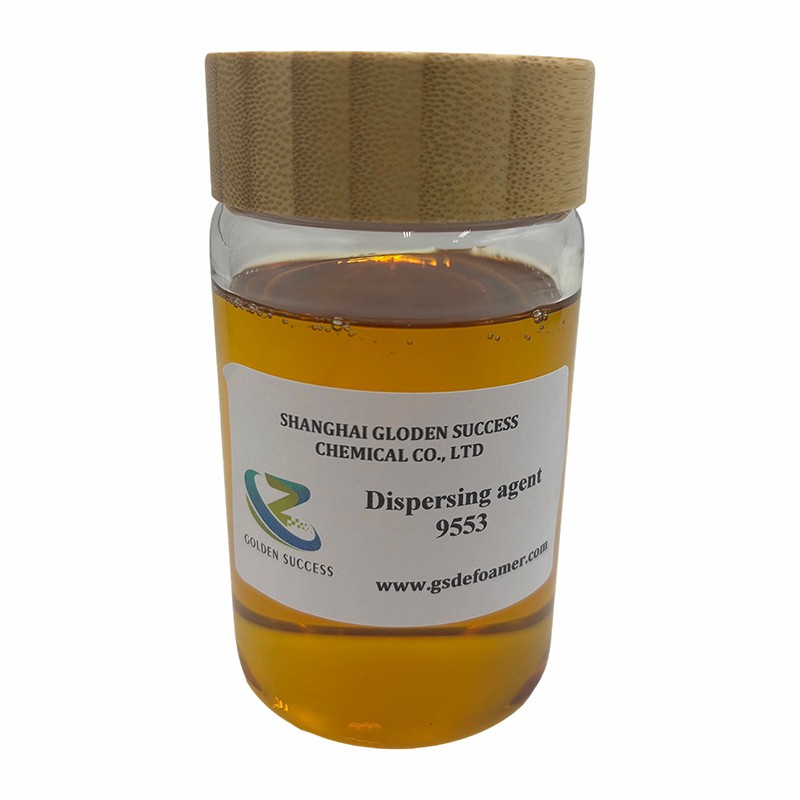
Dispersing Agent 9553 is a versatile option that can work with a wide range of nanomaterials. It has good compatibility with different types of oils, making it suitable for various applications.
Testing and Evaluation
We don't just claim that our dispersing agents work; we back it up with testing. We use advanced techniques like dynamic light scattering (DLS) to measure the particle size distribution of the nanomaterials in the oil medium. A narrow particle size distribution indicates good dispersion.
We also look at the stability of the dispersion over time. We store samples at different temperatures and monitor any changes in the particle size or the appearance of the dispersion. If there's no significant change in the particle size or if there's no visible agglomeration, it means our dispersing agents are doing their job.
Applications of Well - Dispersed Nanomaterials
When nanomaterials are well - dispersed using our oil - based dispersing agents, they can be used in a wide range of applications.
In the automotive industry, well - dispersed nanomaterials can be used in engine oils to improve lubrication and reduce wear. They can also be used in coatings to make cars more scratch - resistant and have better corrosion protection.
In the electronics industry, nanomaterials can be used in printed circuit boards to improve conductivity and reduce the size of components. Well - dispersed nanomaterials ensure that the electrical properties are consistent throughout the material.
Contact Us for Your Dispersing Agent Needs
If you're in the market for high - quality oil - based dispersing agents to improve the dispersion stability of your nanomaterials, we'd love to hear from you. Whether you're working on a research project or a large - scale industrial application, our team of experts can help you choose the right dispersing agent for your needs.
References
- Smith, J. (2018). Nanomaterial Dispersion: Principles and Applications. Elsevier.
- Johnson, A. (2020). The Role of Dispersing Agents in Nanocomposites. Journal of Nanomaterials Research, 15(2), 123 - 135.
- Brown, C. (2019). Oil - Based Dispersing Agents for Nanoparticle Stabilization. Nanotechnology Today, 22, 45 - 52.