

Hey there! As an oil based dispersing agent supplier, I'm super stoked to chat with you about the common types of these nifty agents. So, let's dive right in!
What's an Oil Based Dispersing Agent Anyway?
First off, for those who aren't in the know, an oil based dispersing agent is a chemical additive. It's used to break down and evenly spread solid particles in an oil - based medium. This helps prevent the particles from clumping together, which can mess up the performance of all sorts of products, like paints, inks, and lubricants.
Common Types of Oil Based Dispersing Agents
1. Anionic Dispersing Agents
Anionic dispersing agents are a big deal in the oil - based world. They have negatively charged groups on their molecules. These agents work by adsorbing onto the surface of solid particles. Once they're there, they create a negative charge around the particles. This negative charge causes the particles to repel each other, keeping them well - dispersed in the oil.
One of the great things about anionic dispersing agents is that they're pretty versatile. They can be used in a wide range of oil - based systems, including alkyd resins and mineral oils. They're also known for their good wetting properties, which means they can quickly spread over the surface of the particles and start doing their dispersing magic.
2. Cationic Dispersing Agents
On the flip side, we have cationic dispersing agents. These guys have positively charged groups. They work in a similar way to anionic agents, but instead of a negative charge, they create a positive charge around the particles.
Cationic dispersing agents are often used in specific applications where the surface of the particles has a negative charge. For example, in some oil - based coatings, they can help improve the adhesion of the coating to the substrate. However, they're a bit more limited in their use compared to anionic agents because they can react with some other chemicals in the system.
3. Non - ionic Dispersing Agents
Non - ionic dispersing agents are a popular choice too. They don't have a net charge on their molecules. Instead, they work through steric hindrance. What does that mean? Well, these agents have long chains that stick out from the surface of the particles. These chains act like little barriers, preventing the particles from getting too close to each other and clumping up.
Non - ionic dispersing agents are great because they're compatible with a lot of different types of oils and other additives. They're also less likely to cause problems with chemical reactions in the system. You'll often find them in oil - based inks and some high - performance lubricants.
4. Amphoteric Dispersing Agents
Amphoteric dispersing agents are a bit like the chameleons of the dispersing agent world. They can act as either anionic or cationic, depending on the pH of the system. In acidic conditions, they can have a positive charge, and in alkaline conditions, they can have a negative charge.

This unique property makes them very useful in systems where the pH might change. For example, in some industrial oil - based processes where the pH can vary during different stages, amphoteric dispersing agents can still keep the particles well - dispersed.
Our Product Offerings
At our company, we're proud to offer a range of high - quality oil based dispersing agents. Let me tell you about a few of them.
- Dispersing Agent 9361: This is an anionic dispersing agent that's really good at dispersing pigments in oil - based paints. It provides excellent color development and stability, ensuring that your paint looks great for a long time.
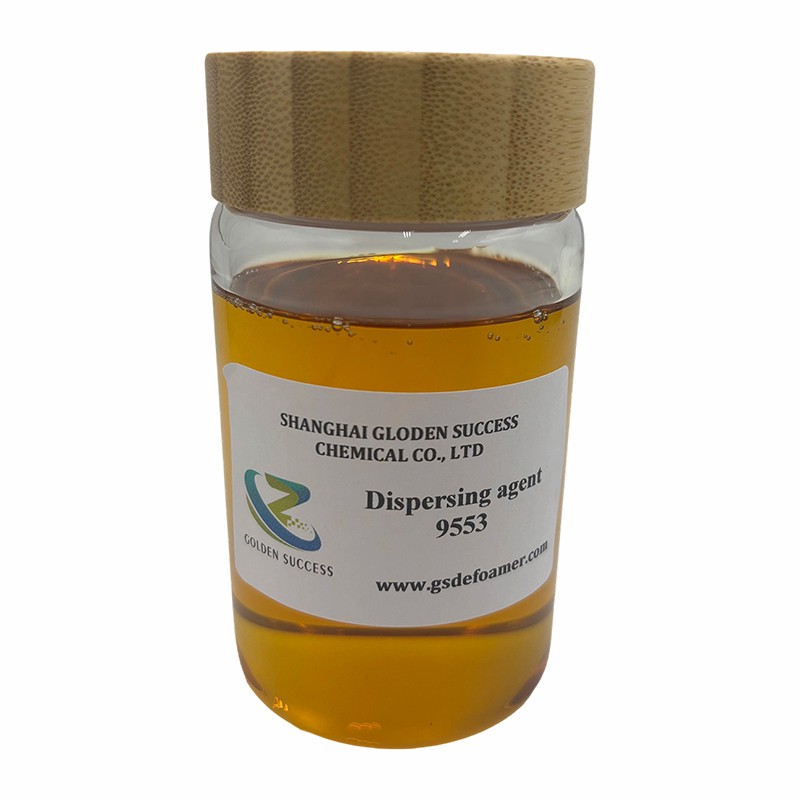
- Dispersing Agent 9553: A non - ionic dispersing agent, this one is perfect for oil - based inks. It helps to reduce the viscosity of the ink, making it easier to print with, and also improves the dispersion of the colorants.
- Dispersing Agent 9211: This amphoteric dispersing agent is ideal for systems where the pH can fluctuate. It keeps the particles well - dispersed no matter what the pH conditions are, making it a reliable choice for many industrial applications.
Why Choose Our Oil Based Dispersing Agents?
- Quality Assurance: We put our products through rigorous testing to make sure they meet the highest standards. You can trust that our dispersing agents will perform as expected.
- Technical Support: Our team of experts is always ready to help you. Whether you have questions about which product to choose or need advice on using our agents, we're here for you.
- Custom Solutions: We understand that every customer's needs are different. That's why we can work with you to develop custom dispersing agent solutions that fit your specific requirements.
Let's Talk Business!
If you're in the market for oil based dispersing agents, I'd love to have a chat with you. Whether you're a small business looking for a reliable supplier or a large corporation in need of high - volume orders, we've got you covered. Reach out to us to discuss your needs, and we can start working on a solution that's perfect for you.
References
- Smith, J. (2020). "Advances in Oil Based Dispersing Agents". Journal of Chemical Additives.
- Johnson, A. (2019). "The Role of Dispersing Agents in Oil - Based Products". Industrial Chemistry Review.