

Hey there! I'm a supplier of defoamer for pulp, and today I wanna chat about the impacts of defoamer for pulp on the pulp's rheological properties. You might be wondering, what on earth are rheological properties, and why should we care about how defoamers affect them? Well, stick around, and I'll break it all down for you.
First off, let's quickly go over what rheological properties are. Rheology is basically the study of how materials flow and deform. In the case of pulp, its rheological properties describe how it behaves when it's being moved around, pumped, or processed. These properties are super important because they can have a huge impact on the efficiency of the pulp and paper - making process. For example, if the pulp flows too easily, it might cause issues with retention and drainage. On the other hand, if it's too thick and doesn't flow well, it can clog pipes and machinery.
Now, let's dive into how defoamers come into play. Defoamers are substances added to pulp to reduce or eliminate foam. Foam in pulp can be a real pain in the you - know - what. It can cause uneven distribution of pulp on the paper machine, lead to air entrapment in the final product, and generally mess up the whole production process. But when we add defoamers, we're not just getting rid of foam; we're also changing the way the pulp behaves in terms of its flow.
One of the main impacts of defoamers on pulp's rheological properties is the change in viscosity. Viscosity is a measure of a fluid's resistance to flow. When you add a defoamer to pulp, it can either increase or decrease the viscosity, depending on the type of defoamer and the nature of the pulp.
Some defoamers work by breaking the surface tension of the foam bubbles, which can release a lot of trapped air in the pulp. This can result in a decrease in the pulp's apparent viscosity, making it flow more easily. For instance, our Defoamer 0667E is designed to effectively burst foam bubbles. As it does so, the pulp becomes more fluid, and the pumping and processing of the pulp become smoother.
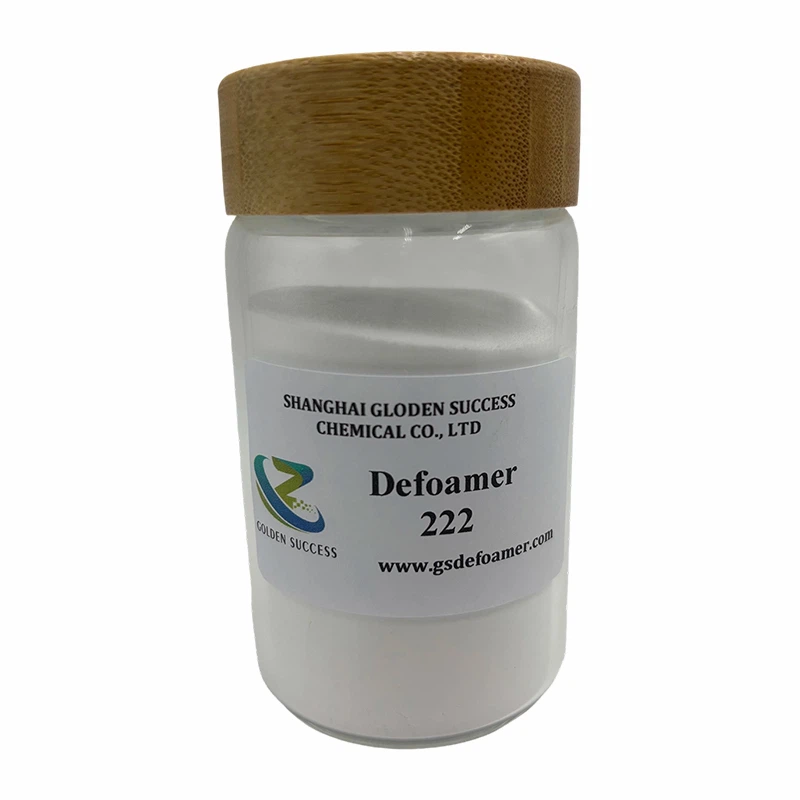
However, other defoamers might interact with the pulp fibers in a way that actually increases the viscosity. This can happen when the defoamer molecules adsorb onto the pulp fibers, causing them to stick together slightly. In some cases, a bit of an increase in viscosity can be beneficial, as it can improve the retention of fine particles in the pulp. Our DEFOAMER 222 is formulated to have a balanced effect on viscosity, helping to optimize the pulp's properties for better paper - making.
Another aspect of rheological properties affected by defoamers is shear thinning. Shear thinning is a phenomenon where the viscosity of a fluid decreases as the shear rate (the rate at which the fluid is being deformed) increases. In the pulp and paper industry, shear rates can vary greatly during different stages of the process, such as pumping and agitation.
Defoamers can influence the shear - thinning behavior of pulp. Some defoamers enhance the shear - thinning effect, which means that the pulp will flow more easily under high - shear conditions. This is great for processes like pumping the pulp through narrow pipes or through the headbox of a paper machine. On the other hand, if a defoamer reduces the shear - thinning effect, the pulp might be more resistant to flow changes under different shear rates. Our DEFOAMER 2935 is engineered to adjust the shear - thinning behavior of pulp according to the specific needs of the production process.

The addition of defoamers can also impact the elasticity of the pulp. Elasticity refers to the ability of a material to return to its original shape after being deformed. In pulp, elasticity can affect how well the pulp forms a uniform sheet on the paper machine. If the pulp is too elastic, it might not spread out evenly, leading to uneven paper thickness. Defoamers can either increase or decrease the pulp's elasticity, depending on their chemical composition.
We understand that every pulp and paper mill has its own unique production process and requirements. That's why we offer a range of defoamers, each with different formulations and properties. By choosing the right defoamer for your specific situation, you can optimize the rheological properties of your pulp and improve the overall efficiency and quality of your paper - making process.
If you're interested in learning more about how our defoamers can benefit your pulp production, or if you want to discuss which defoamer would be the best fit for your needs, don't hesitate to reach out. We're more than happy to have a chat and help you find the perfect solution for your operation.
References
- Papier - chemie: Grundlagen und Anwendungen in der Papierfabrikation. K. P. Götze
- Handbook of Pulp. Christopher J. Biermann