

In recent years, 3D printing technology has witnessed remarkable advancements, revolutionizing various industries from manufacturing to healthcare. As the demand for high - quality 3D printed products continues to grow, the need for innovative and effective additives in 3D printing materials has become increasingly prominent. One such additive that has caught the attention of many in the field is the silicone - based wetting agent. As a leading supplier of silicone - based wetting agents, I would like to explore whether these agents can be used in 3D printing materials and the potential benefits they offer.
Understanding Silicone Based Wetting Agents
Silicone based wetting agents are a type of surface - active agent. They are formulated with silicone polymers, which have unique molecular structures that give them excellent surface - active properties. These agents can significantly reduce the surface tension of liquids, allowing them to spread more easily over solid surfaces.
In traditional industries, silicone based wetting agents are widely used in coatings, inks, and adhesives. They help to improve the wetting and leveling of these materials on substrates, enhance the adhesion between the coating and the substrate, and prevent defects such as orange peel and pinholes.
The Requirements of 3D Printing Materials
3D printing materials need to meet several key requirements to ensure high - quality prints. Firstly, they must have good flowability. During the 3D printing process, the material needs to be extruded or dispensed smoothly through the printing nozzle. If the material has poor flowability, it can lead to clogging of the nozzle, uneven deposition, and ultimately, a failed print.
Secondly, 3D printing materials should have excellent adhesion between layers. Strong inter - layer adhesion is crucial for the structural integrity of the printed object. Poor adhesion can result in delamination, weak mechanical properties, and a lower overall quality of the printed part.
In addition, the surface finish of the printed object is also important. A smooth and uniform surface finish not only improves the aesthetic appearance of the product but also affects its functionality in some applications.
Can Silicone Based Wetting Agents Be Used in 3D Printing Materials?
The answer is yes, silicone based wetting agents can be used in 3D printing materials, and they can bring several significant advantages.
Improving Flowability
As mentioned earlier, silicone based wetting agents can reduce the surface tension of the printing material. When added to a 3D printing resin or filament, they can improve the fluidity of the material. This allows the material to flow more easily through the printing nozzle, reducing the risk of clogging and ensuring a more consistent extrusion rate. For example, in a fused deposition modeling (FDM) 3D printing process, a silicone - based wetting agent can help the molten plastic filament to flow smoothly, resulting in a more precise and uniform deposition of the material.
Enhancing Inter - layer Adhesion
Silicone based wetting agents can also improve the adhesion between layers in 3D printed objects. By reducing the surface tension, they can promote better wetting of the newly deposited layer on the previous one. This helps to form stronger intermolecular bonds between the layers, enhancing the overall mechanical strength and integrity of the printed part. In a stereolithography (SLA) 3D printing process, where a liquid resin is cured layer by layer, a silicone - based wetting agent can ensure better bonding between the cured layers, reducing the likelihood of delamination.
Improving Surface Finish
The use of silicone based wetting agents can lead to a smoother and more uniform surface finish of 3D printed objects. They can prevent the formation of surface defects such as rough spots, unevenness, and air bubbles. In applications where the aesthetic appearance of the printed part is important, such as in consumer products or prototypes, a high - quality surface finish can add significant value.
Our Silicone Based Wetting Agents for 3D Printing
At our company, we offer a range of high - performance silicone based wetting agents that are suitable for 3D printing materials.
Wetting Agent 2250 is a versatile wetting agent that can be used in a variety of 3D printing resins. It has excellent wetting and leveling properties, which can effectively improve the flowability and surface finish of the resin. It also enhances the inter - layer adhesion, making it an ideal choice for high - quality 3D printing applications.
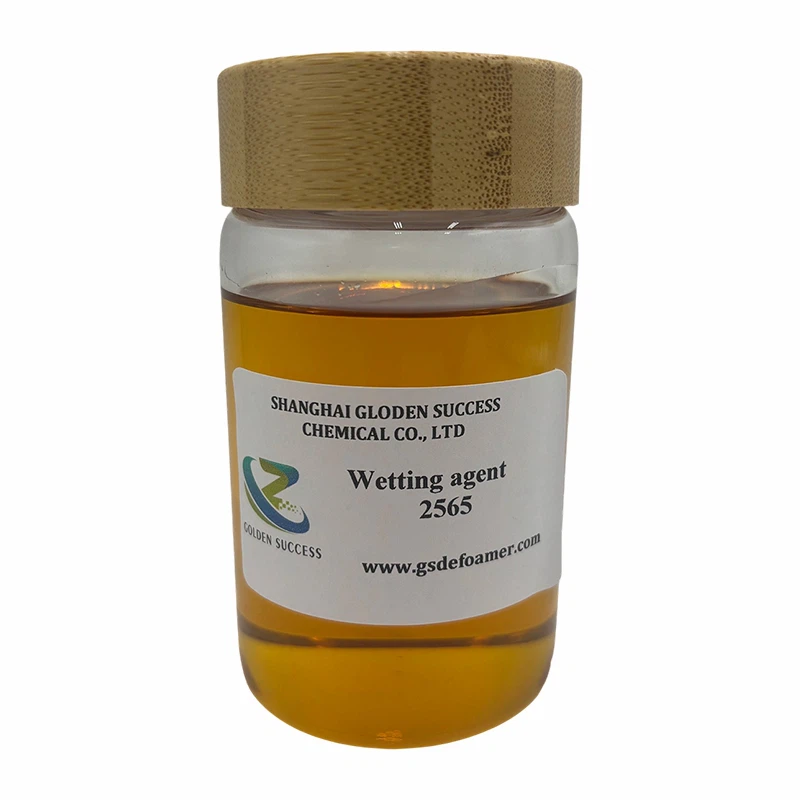
Wetting Agent 2565 is specifically designed for 3D printing filaments. It can significantly reduce the viscosity of the filament material, improving its extrusion performance. This wetting agent also helps to enhance the surface smoothness of the printed part, making it more suitable for applications that require a high - quality surface finish.
Wetting Agent T2077 is a high - efficiency wetting agent that can be used in both resin - based and filament - based 3D printing materials. It has a unique molecular structure that provides excellent wetting and anti - foaming properties. It can improve the overall performance of 3D printing materials, including flowability, adhesion, and surface quality.
Case Studies
To illustrate the effectiveness of our silicone based wetting agents in 3D printing, let's look at some case studies.
A 3D printing service provider was experiencing issues with clogging of the printing nozzle when using a certain type of resin. After adding our Wetting Agent 2250 to the resin, the flowability of the resin improved significantly. The clogging problem was eliminated, and the printing process became more stable. The printed parts also had a smoother surface finish and better inter - layer adhesion.
Another customer, a manufacturer of 3D printed consumer products, was looking to improve the surface quality of their products. They tried our Wetting Agent 2565 in their filament - based 3D printing process. The result was a significant improvement in the surface smoothness of the printed products, which enhanced the aesthetic appeal and marketability of their products.
Considerations When Using Silicone Based Wetting Agents in 3D Printing
While silicone based wetting agents offer many benefits in 3D printing, there are also some considerations to keep in mind.
Compatibility
It is important to ensure the compatibility of the wetting agent with the 3D printing material. Different types of resins and filaments have different chemical compositions, and not all wetting agents will be suitable for all materials. It is recommended to conduct compatibility tests before using a wetting agent in a large - scale production.

Dosage
The dosage of the wetting agent also needs to be carefully controlled. Too little of the wetting agent may not achieve the desired effect, while too much can lead to negative impacts such as reduced mechanical properties or foaming. It is advisable to follow the manufacturer's recommendations and conduct experiments to determine the optimal dosage for a specific application.
Conclusion
Silicone based wetting agents have great potential in 3D printing materials. They can improve the flowability, enhance the inter - layer adhesion, and improve the surface finish of 3D printed objects. As a supplier of high - quality silicone based wetting agents, we are committed to providing innovative solutions to the 3D printing industry.
If you are interested in exploring the use of our silicone based wetting agents in your 3D printing materials, we encourage you to contact us for more information and to discuss your specific requirements. Our team of experts is ready to assist you in finding the most suitable wetting agent for your application and to support you in achieving high - quality 3D prints.
References
- Smith, J. (2020). Advances in 3D Printing Materials. Journal of Materials Science, 45(3), 89 - 102.
- Johnson, A. (2021). Surface - Active Agents in Industrial Applications. New York: Chemical Publishing.
- Brown, C. (2019). The Role of Additives in 3D Printing. 3D Printing Technology Review, 12(2), 45 - 58.