

Oil-based dispersing agents play a crucial role in various industries, including paints, coatings, inks, and adhesives. These agents are designed to break down and disperse solid particles in oil-based systems, ensuring uniform distribution and preventing agglomeration. As a leading supplier of oil-based dispersing agents, we understand the importance of measuring their effectiveness to ensure optimal performance in different applications. In this blog post, we will discuss the key factors to consider and the methods available for measuring the effectiveness of oil-based dispersing agents.
Key Factors Affecting the Effectiveness of Oil-Based Dispersing Agents
Before delving into the measurement methods, it is essential to understand the key factors that influence the effectiveness of oil-based dispersing agents. These factors include:
- Particle Size and Distribution: The size and distribution of the solid particles in the oil-based system significantly impact the performance of the dispersing agent. Smaller particles with a narrow size distribution are generally easier to disperse and require less dispersing agent.
- Surface Chemistry of Particles: The surface chemistry of the solid particles, such as their polarity, charge, and functional groups, affects the interaction between the particles and the dispersing agent. A good dispersing agent should be able to adsorb onto the particle surface and create a stable dispersion.
- Compatibility with the Oil Medium: The dispersing agent must be compatible with the oil medium to ensure proper dispersion and stability. Incompatible dispersing agents may cause phase separation, flocculation, or other stability issues.
- Concentration of Dispersing Agent: The concentration of the dispersing agent in the oil-based system is critical. Too little dispersing agent may not provide sufficient dispersion, while too much may lead to increased viscosity, foaming, or other problems.
Methods for Measuring the Effectiveness of Oil-Based Dispersing Agents
There are several methods available for measuring the effectiveness of oil-based dispersing agents. These methods can be broadly classified into two categories: direct methods and indirect methods.
Direct Methods
- Particle Size Analysis: Particle size analysis is one of the most common and direct methods for measuring the effectiveness of dispersing agents. This method involves measuring the size and distribution of the solid particles in the oil-based system before and after the addition of the dispersing agent. A decrease in particle size and a narrower size distribution indicate better dispersion. There are several techniques available for particle size analysis, including laser diffraction, dynamic light scattering, and sedimentation analysis.
- Microscopy: Microscopy techniques, such as optical microscopy, scanning electron microscopy (SEM), and transmission electron microscopy (TEM), can provide visual information about the dispersion state of the solid particles in the oil-based system. These techniques allow for direct observation of the particle size, shape, and agglomeration state. By comparing the micrographs before and after the addition of the dispersing agent, one can evaluate the effectiveness of the dispersion.
- Sedimentation Analysis: Sedimentation analysis measures the rate at which the solid particles settle in the oil-based system. A slower sedimentation rate indicates better dispersion and stability. This method can be performed using a simple sedimentation tube or a more advanced instrument, such as a centrifuge.
Indirect Methods
- Viscosity Measurement: Viscosity is an important property of oil-based systems, and it can be used as an indirect measure of the effectiveness of dispersing agents. A well-dispersed system typically has a lower viscosity than a poorly dispersed system. By measuring the viscosity of the oil-based system before and after the addition of the dispersing agent, one can evaluate the dispersion efficiency. However, it should be noted that viscosity is also affected by other factors, such as the concentration of the solid particles and the temperature.
- Stability Testing: Stability testing involves monitoring the stability of the oil-based system over time. This can be done by observing the appearance of the system, such as changes in color, transparency, or phase separation. A stable dispersion should remain homogeneous and free of sedimentation or flocculation for a certain period. Accelerated stability testing, such as heating or centrifugation, can also be used to simulate long-term storage conditions and evaluate the stability of the dispersion.
- Rheological Analysis: Rheological analysis measures the flow behavior of the oil-based system under different conditions, such as shear rate and temperature. This method can provide information about the viscosity, elasticity, and thixotropy of the system, which are related to the dispersion state and stability. By analyzing the rheological properties of the oil-based system before and after the addition of the dispersing agent, one can evaluate the effectiveness of the dispersion.
Our Oil-Based Dispersing Agents
As a supplier of oil-based dispersing agents, we offer a range of high-quality products that are designed to meet the specific needs of different industries. Our dispersing agents are carefully formulated to provide excellent dispersion performance, stability, and compatibility with various oil media.
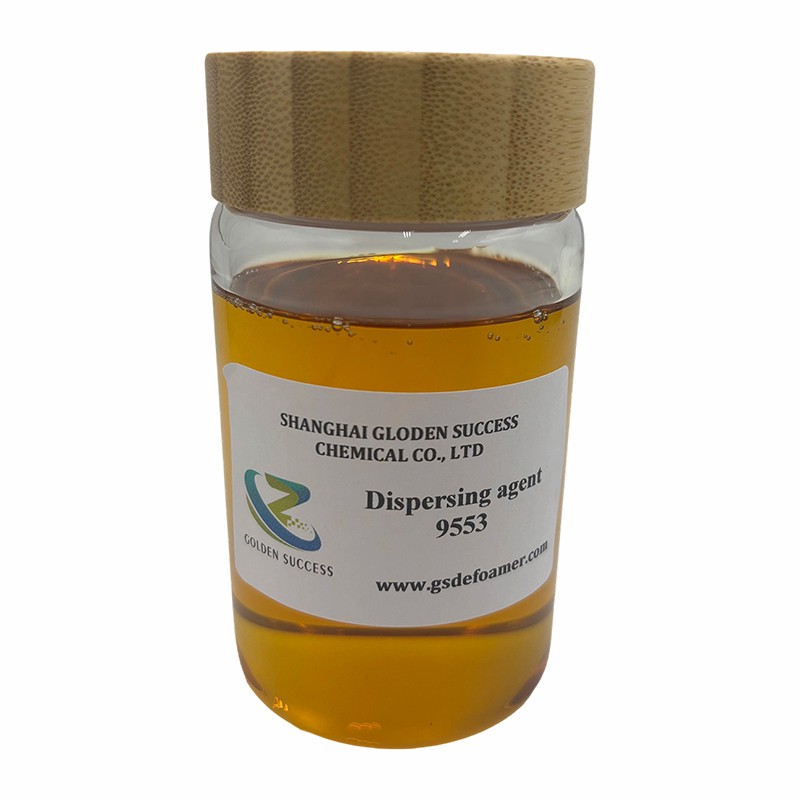
- Dispersing Agent 9553: This dispersing agent is specifically designed for use in high-solid and solvent-based coatings. It provides excellent dispersion of pigments and fillers, resulting in improved color development, gloss, and hiding power.
- Dispersing Agent 9211: Dispersing Agent 9211 is a versatile dispersing agent that can be used in a wide range of oil-based applications, including paints, inks, and adhesives. It offers good dispersion performance and stability, even at high pigment loadings.
- Dispersing Agent 9104: This dispersing agent is suitable for use in oil-based systems with high polarity. It provides excellent dispersion of polar pigments and fillers and helps to improve the stability and performance of the system.
Conclusion
Measuring the effectiveness of oil-based dispersing agents is essential to ensure optimal performance in different applications. By understanding the key factors that affect the effectiveness of dispersing agents and using appropriate measurement methods, one can select the right dispersing agent and optimize its concentration for a given oil-based system. As a leading supplier of oil-based dispersing agents, we are committed to providing high-quality products and technical support to our customers. If you have any questions or need further information about our oil-based dispersing agents, please feel free to contact us for procurement and further discussion.

References
- ASTM International. (20XX). Standard Test Methods for Particle Size Distribution of Pigments by Laser Diffraction. ASTM D4464.
- ISO. (20XX). Determination of Particle Size Distribution - Dynamic Light Scattering (DLS). ISO 22412.
- Hiemenz, P. C., & Rajagopalan, R. (1997). Principles of Colloid and Surface Chemistry. Marcel Dekker.