

Hey there! I'm a supplier of silicone based wetting agents, and today I wanna chat about how to optimize the use of these agents in a formulation. It's super important to get this right, as it can make a huge difference in the performance of your product.
First off, let's understand what silicone based wetting agents are. They're basically substances that reduce the surface tension of a liquid, allowing it to spread more easily over a surface. This is incredibly useful in a bunch of industries, like coatings, adhesives, and personal care products.
Understanding Your Formulation
The very first step in optimizing the use of a silicone based wetting agent is to really understand your formulation. You need to know what other ingredients are in there, their properties, and how they interact with each other. For example, if you're working on a coating formulation, you've got to consider the resin type, solvents, pigments, and fillers. Each of these can have an impact on how the wetting agent performs.
Some ingredients might be compatible with the wetting agent, while others could cause problems. For instance, certain pigments might absorb the wetting agent, reducing its effectiveness. So, it's crucial to do some preliminary testing to see how the wetting agent behaves in your specific formulation.
Selecting the Right Wetting Agent
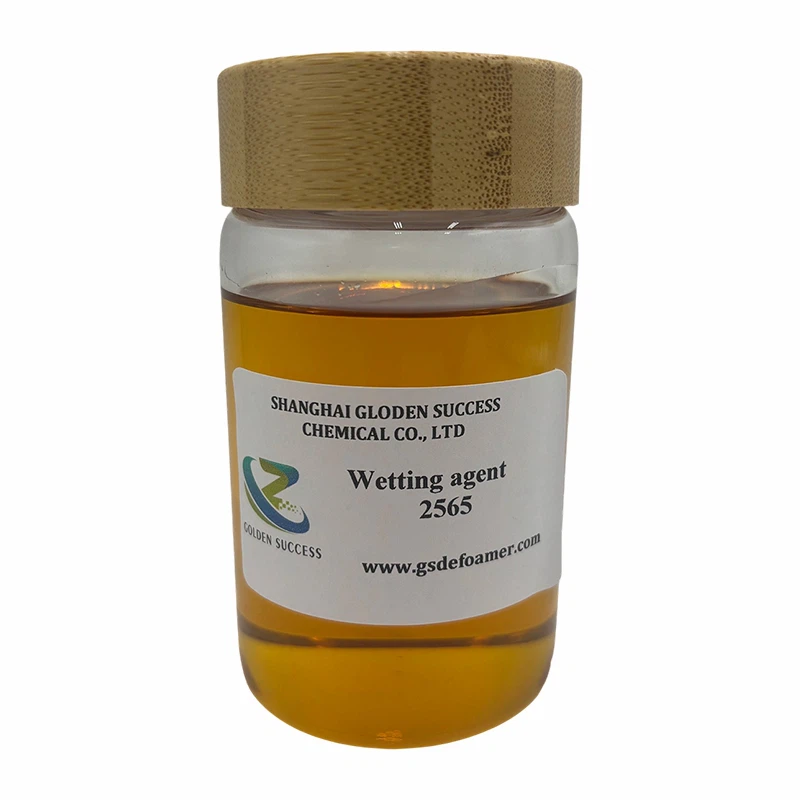
Not all silicone based wetting agents are created equal. There are different types with varying properties, and choosing the right one for your formulation is key. At our company, we offer a range of wetting agents, such as Wetting Agent 2445, Wetting Agent 2565, and Wetting Agent 2250.
When selecting a wetting agent, you need to think about factors like the surface tension reduction you need, the compatibility with other ingredients, and the application method. If you're applying the formulation by spraying, you'll need a wetting agent that can provide good atomization and wetting on the sprayed surface. On the other hand, if it's a dip-coating process, you might need a wetting agent that can prevent air entrapment.
Determining the Right Concentration
Once you've selected the right wetting agent, the next step is to figure out the optimal concentration. Using too little of the wetting agent won't give you the desired wetting effect, while using too much can lead to problems like foam formation, instability, and increased cost.
To determine the right concentration, you can start with some small-scale tests. Make a series of samples with different concentrations of the wetting agent and evaluate their performance. Look at factors like wetting spread, leveling, and adhesion. You can also use some analytical techniques, like surface tension measurement, to get a more quantitative understanding of the wetting behavior.
Mixing and Incorporation
Proper mixing and incorporation of the wetting agent into the formulation are also crucial. You don't want to just dump it in and hope for the best. The wetting agent needs to be evenly distributed throughout the formulation to ensure consistent performance.
Depending on the type of formulation, you might need to use different mixing techniques. For liquid formulations, a high-speed mixer might be sufficient to ensure good dispersion. However, for more viscous formulations or those with a lot of solid particles, you might need to use a homogenizer or a three-roll mill to break up any agglomerates and ensure proper mixing.
Environmental Considerations
The environment in which the formulation is used can also have an impact on the performance of the wetting agent. Factors like temperature, humidity, and air flow can all affect how the wetting agent behaves.
For example, at higher temperatures, the surface tension of the liquid might decrease, which could affect the wetting behavior. Similarly, high humidity can cause moisture to be absorbed into the formulation, which might interact with the wetting agent. So, it's important to consider these environmental factors when optimizing the use of the wetting agent.
Troubleshooting
Even when you've done everything right, you might still encounter some problems. Common issues include poor wetting, foam formation, and compatibility problems.
If you're experiencing poor wetting, it could be due to a number of reasons. Maybe the wetting agent concentration is too low, or there's a compatibility issue with another ingredient. You can try increasing the concentration of the wetting agent or changing the type of wetting agent.
Foam formation can be a real pain, especially in applications where a smooth surface is required. To reduce foam, you can try using an anti-foaming agent in combination with the wetting agent. You can also adjust the mixing speed or the order of ingredient addition to prevent air entrapment.
Compatibility problems can be more difficult to solve. If you suspect a compatibility issue, you might need to do some more in-depth testing to identify the problem ingredient and find a solution. This could involve replacing the incompatible ingredient or using a different wetting agent.

Conclusion
Optimizing the use of silicone based wetting agents in a formulation is a complex process that requires careful consideration of many factors. By understanding your formulation, selecting the right wetting agent, determining the optimal concentration, ensuring proper mixing, considering environmental factors, and troubleshooting any problems, you can achieve the best possible performance.
If you're interested in learning more about our silicone based wetting agents or need help with optimizing their use in your formulation, don't hesitate to get in touch. We're here to support you and help you get the most out of our products.
References
- Smith, J. (2018). "Surface Chemistry in Formulation Design." Journal of Applied Chemistry, 45(2), 123-135.
- Johnson, A. (2019). "Optimizing Wetting Agents in Coatings." Coatings Technology Magazine, 22(3), 45-52.
- Brown, C. (2020). "Environmental Effects on Wetting Behavior." International Journal of Materials Science, 30(4), 234-245.