

Silicone-based wetting agents are versatile additives that play a crucial role in a wide range of industries. As a leading supplier of silicone-based wetting agents, I have witnessed firsthand the diverse applications and benefits of these products. In this blog post, I will explore some of the industries where silicone-based wetting agents are commonly used and highlight their key advantages.
Paint and Coatings Industry
The paint and coatings industry is one of the largest consumers of silicone-based wetting agents. These agents are added to paint formulations to improve the wetting and spreading properties of the paint on various surfaces. By reducing the surface tension of the paint, silicone-based wetting agents enable it to spread evenly and form a smooth, uniform film. This results in better coverage, fewer defects, and improved adhesion.

One of the key advantages of using silicone-based wetting agents in paints and coatings is their ability to enhance the flow and leveling properties. They help to reduce the formation of brush marks, orange peel, and other surface imperfections, resulting in a high-quality finish. Additionally, silicone-based wetting agents can improve the resistance of the paint to water, chemicals, and UV radiation, extending the lifespan of the coating.
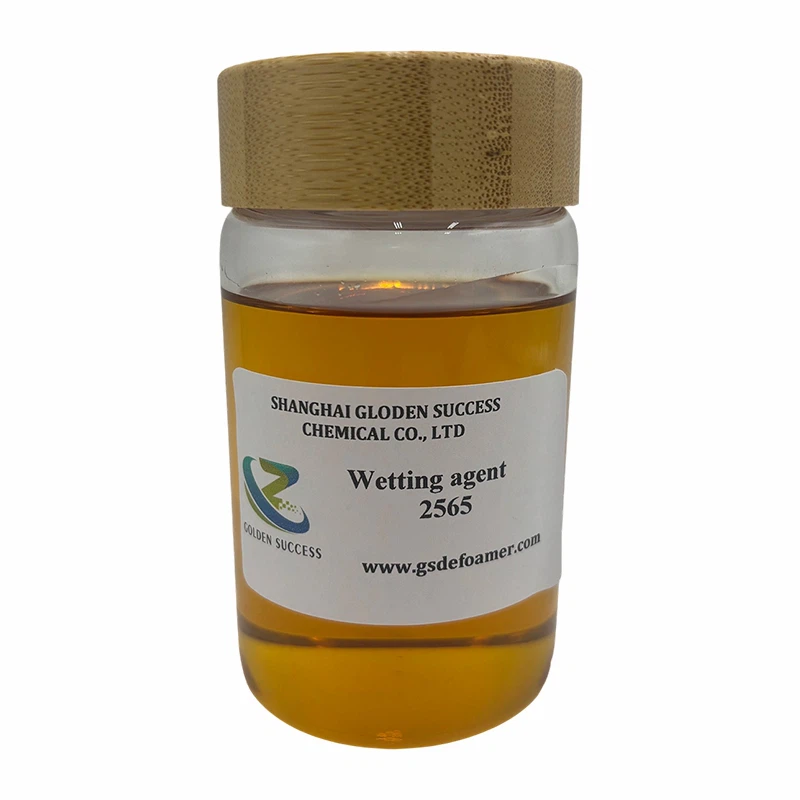
For example, our Wetting Agent 2565 is specifically designed for use in water-based paints and coatings. It provides excellent wetting and leveling properties, as well as good compatibility with other additives. This product is widely used in architectural coatings, industrial coatings, and automotive paints.
Printing Industry
In the printing industry, silicone-based wetting agents are used to improve the wetting and spreading of inks on various substrates. They help to reduce the surface tension of the ink, allowing it to spread evenly and form sharp, clear images. Silicone-based wetting agents also improve the adhesion of the ink to the substrate, preventing it from smudging or rubbing off.
One of the main challenges in the printing industry is achieving consistent ink transfer and coverage. Silicone-based wetting agents can help to overcome this challenge by improving the flow and leveling of the ink. They also reduce the formation of air bubbles and pinholes in the ink film, resulting in a more uniform print quality.
Our Wetting Agent 2408 is a high-performance wetting agent that is suitable for use in a wide range of printing inks, including solvent-based, water-based, and UV-curable inks. It provides excellent wetting and spreading properties, as well as good compatibility with other ink additives. This product is widely used in flexographic, gravure, and screen printing applications.
Agriculture Industry
The agriculture industry also benefits from the use of silicone-based wetting agents. These agents are added to pesticides, herbicides, and fertilizers to improve their wetting and spreading properties on plant surfaces. By reducing the surface tension of the solution, silicone-based wetting agents enable it to spread more evenly and cover a larger area of the plant. This results in better absorption of the chemicals by the plant, improving their effectiveness.
Silicone-based wetting agents can also enhance the adhesion of the chemicals to the plant surface, preventing them from being washed off by rain or irrigation. This helps to ensure that the chemicals remain on the plant for a longer period of time, providing better protection against pests and diseases.
In addition, silicone-based wetting agents can improve the penetration of the chemicals into the plant tissue, allowing them to reach the target sites more effectively. This can lead to faster and more efficient control of pests and diseases, reducing the need for repeated applications of chemicals.
Our Wetting Agent 2648 is a specialized wetting agent that is designed for use in agricultural applications. It provides excellent wetting and spreading properties, as well as good compatibility with a wide range of pesticides, herbicides, and fertilizers. This product is widely used in crop protection, turf management, and horticulture.
Personal Care Industry
In the personal care industry, silicone-based wetting agents are used in a variety of products, such as shampoos, conditioners, lotions, and creams. These agents help to improve the wetting and spreading of the products on the skin and hair, making them easier to apply and distribute evenly.
Silicone-based wetting agents also provide a smooth, silky feel to the products, enhancing their sensory properties. They can improve the solubility and stability of other ingredients in the formulation, preventing them from separating or settling out.
In addition, silicone-based wetting agents can help to reduce the surface tension of the products, allowing them to penetrate the skin and hair more effectively. This can lead to better moisturization, conditioning, and protection of the skin and hair.
Our silicone-based wetting agents are formulated to meet the specific requirements of the personal care industry. They are safe, non-toxic, and compatible with a wide range of ingredients. These products are widely used in high-quality personal care products, providing excellent performance and customer satisfaction.
Other Industries
Silicone-based wetting agents are also used in many other industries, such as adhesives, sealants, plastics, and textiles. In the adhesives and sealants industry, these agents are used to improve the wetting and adhesion of the products to various substrates. They help to reduce the surface tension of the adhesive or sealant, allowing it to spread evenly and form a strong bond.
In the plastics industry, silicone-based wetting agents are used to improve the processing and performance of plastic materials. They can reduce the friction between the plastic and the processing equipment, making it easier to mold and extrude the plastic. Silicone-based wetting agents can also improve the surface properties of the plastic, such as its gloss, smoothness, and scratch resistance.
In the textiles industry, silicone-based wetting agents are used to improve the wetting and spreading of dyes and finishing agents on the fabric. They help to reduce the surface tension of the solution, allowing it to penetrate the fabric more effectively and achieve better color fastness and uniformity.
Conclusion
Silicone-based wetting agents are essential additives in many industries, providing a wide range of benefits such as improved wetting, spreading, adhesion, flow, and leveling. As a supplier of silicone-based wetting agents, we are committed to providing high-quality products that meet the specific needs of our customers.
If you are interested in learning more about our silicone-based wetting agents or would like to discuss your specific application requirements, please feel free to contact us. Our team of experts is available to provide you with technical support and guidance to help you choose the right product for your needs. We look forward to working with you and helping you achieve your goals.
References
- ASTM International. (2023). Standard Test Methods for Surface Tension of Organic Coatings, Polymers, and Paints. ASTM D1331 - 14(2023).
- Cosmetics Europe. (2023). Scientific Facts about Silicones in Cosmetics.
- Farm Chemicals Handbook. (2023). Agricultural Chemicals Reference Guide.