

Hey there! I'm a supplier of silicone based wetting agents, and today I wanna chat about the limitations of these products. Silicone based wetting agents are pretty popular in various industries due to their unique properties. They can reduce the surface tension of liquids, which helps the liquid spread more easily on a surface. But like any product, they've got their downsides too.
Compatibility Issues
One of the major limitations of silicone based wetting agents is compatibility. These agents might not play well with certain materials. For example, in some cases, they can cause issues when used with certain types of plastics. When a silicone based wetting agent comes into contact with some plastics, it can lead to swelling or cracking over time. This is a real headache for manufacturers who are trying to use these agents in plastic - related applications.
Let's say you're using a wetting agent in a plastic coating process. If the wetting agent isn't compatible with the plastic substrate, it can result in a poor - quality finish. The coating might not adhere properly, or it could develop a rough texture. This is a big no - no in industries where a smooth and durable finish is crucial, like the automotive or electronics industries.
Environmental Concerns
Another limitation is the environmental impact. Silicone based wetting agents are not always the most eco - friendly option. They can be difficult to break down in the environment. When these agents end up in water bodies, they can persist for a long time and potentially have negative effects on aquatic life.

Some studies have shown that silicone compounds can accumulate in the tissues of fish and other aquatic organisms. This bioaccumulation can disrupt the normal functioning of these organisms, affecting their growth, reproduction, and overall health. In addition, the production of silicone based wetting agents often involves energy - intensive processes and the use of certain chemicals that can be harmful to the environment.
Cost
Cost is also a significant factor. Silicone based wetting agents tend to be more expensive compared to some other types of wetting agents. The raw materials used in their production are often costly, and the manufacturing processes can be complex. This higher cost can be a deterrent for some businesses, especially those operating on a tight budget.
For small - scale manufacturers or those in price - sensitive markets, the extra cost of using silicone based wetting agents might not be justifiable. They might opt for cheaper alternatives, even if they don't offer the same level of performance. This can limit the market penetration of silicone based wetting agents, despite their many advantages.
Foaming Problems
Silicone based wetting agents can sometimes cause foaming issues. In some applications, such as in industrial cleaning or inks, excessive foaming can be a real problem. Foam can make it difficult to control the process. For example, in a cleaning process, too much foam can reduce the efficiency of the cleaning solution. It can also make it harder to rinse off the solution, leaving behind residues.
In the printing industry, foaming in inks can lead to printing defects. The foam can cause uneven ink distribution on the printing surface, resulting in blurry or inconsistent prints. This can be a major issue for businesses that rely on high - quality printing, such as packaging manufacturers or graphic design studios.
Sensitivity to Temperature and pH
Silicone based wetting agents can be sensitive to changes in temperature and pH. Extreme temperatures can affect their performance. At very high temperatures, the silicone molecules in the wetting agent can break down, losing their wetting properties. On the other hand, at very low temperatures, the agent might become too viscous, making it difficult to use.
The pH of the environment can also have an impact. If the pH is outside the recommended range for a particular silicone based wetting agent, it can cause the agent to lose its effectiveness. For example, in some chemical processes where the pH can vary, it can be challenging to maintain the optimal performance of the wetting agent.
Product - Specific Limitations
Let's take a look at some of our specific products and their limitations. Our Wetting Agent 2478 is a great product, but it has some limitations. It's not very suitable for use in highly alkaline environments. In such conditions, the silicone structure can be damaged, leading to a loss of its wetting ability.
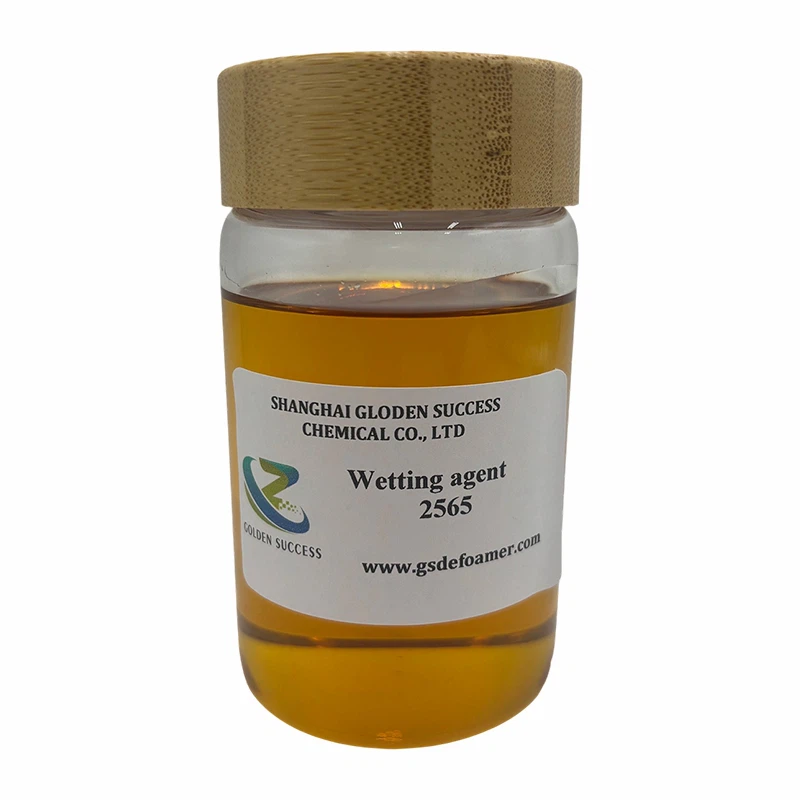
Wetting Agent 2565 is known for its excellent spreading properties, but it can be a bit too volatile in high - temperature applications. The agent can evaporate quickly, which means that it might not provide long - lasting wetting effects.
Wetting Agent 2346 has good compatibility with many materials, but it can cause some discoloration issues when used with certain types of dyes or pigments. This can be a problem in industries where color accuracy is important, like the textile or paint industries.
Conclusion
Despite these limitations, silicone based wetting agents still have a lot to offer. They have unique properties that make them suitable for many applications. If you're facing a situation where you need a wetting agent with high - performance spreading and low - surface - tension properties, silicone based wetting agents could be the right choice.
We understand that these limitations can be a concern for you. That's why we're always working on improving our products to minimize these issues. If you're interested in learning more about our silicone based wetting agents or have any questions about how to overcome these limitations in your specific application, we'd love to hear from you. Reach out to us, and let's have a chat about your needs. We can work together to find the best solution for your business.
References
- Smith, J. (2018). "The Impact of Silicone - Based Compounds on Aquatic Ecosystems". Environmental Science Journal, Vol. 23, pp. 45 - 56.
- Johnson, A. (2019). "Cost - Benefit Analysis of Different Wetting Agents in Industrial Applications". Industrial Manufacturing Review, Vol. 15, pp. 78 - 89.
- Brown, C. (2020). "Compatibility Issues of Silicone - Based Wetting Agents with Various Substrates". Materials Science Quarterly, Vol. 30, pp. 32 - 41.