

Hey there! I'm an oil based dispersing agent supplier, and I've been getting a lot of questions lately about whether oil based dispersing agents can be used in 3D printing materials. So, I thought I'd take a few minutes to share my thoughts on this topic.
First off, let's talk about what oil based dispersing agents are. These are substances that help to evenly distribute solid particles in a liquid medium. They work by reducing the surface tension between the particles and the liquid, which prevents the particles from clumping together and settling at the bottom of the container. This is important because it ensures that the particles are uniformly dispersed throughout the liquid, which can improve the quality and performance of the final product.
Now, let's get to the question at hand: Can oil based dispersing agents be used in 3D printing materials? The short answer is yes, they can. In fact, oil based dispersing agents can offer several benefits when used in 3D printing materials.
One of the main benefits of using oil based dispersing agents in 3D printing materials is that they can improve the flowability of the material. This is important because 3D printing requires the material to be able to flow smoothly through the printer nozzle. If the material is too viscous or contains clumps of particles, it can clog the nozzle and cause the printer to malfunction. By using an oil based dispersing agent, you can reduce the viscosity of the material and ensure that it flows smoothly through the nozzle, which can improve the printing process and reduce the risk of clogs.
Another benefit of using oil based dispersing agents in 3D printing materials is that they can improve the mechanical properties of the final product. When solid particles are evenly dispersed throughout the material, they can provide additional reinforcement and improve the strength and durability of the product. This is particularly important for applications where the 3D printed object will be subjected to stress or wear, such as in automotive or aerospace industries.
In addition to improving the flowability and mechanical properties of the material, oil based dispersing agents can also improve the surface finish of the final product. When the particles are evenly dispersed, they can create a smoother and more uniform surface, which can enhance the aesthetic appeal of the object. This is especially important for applications where the appearance of the product is important, such as in consumer products or jewelry.
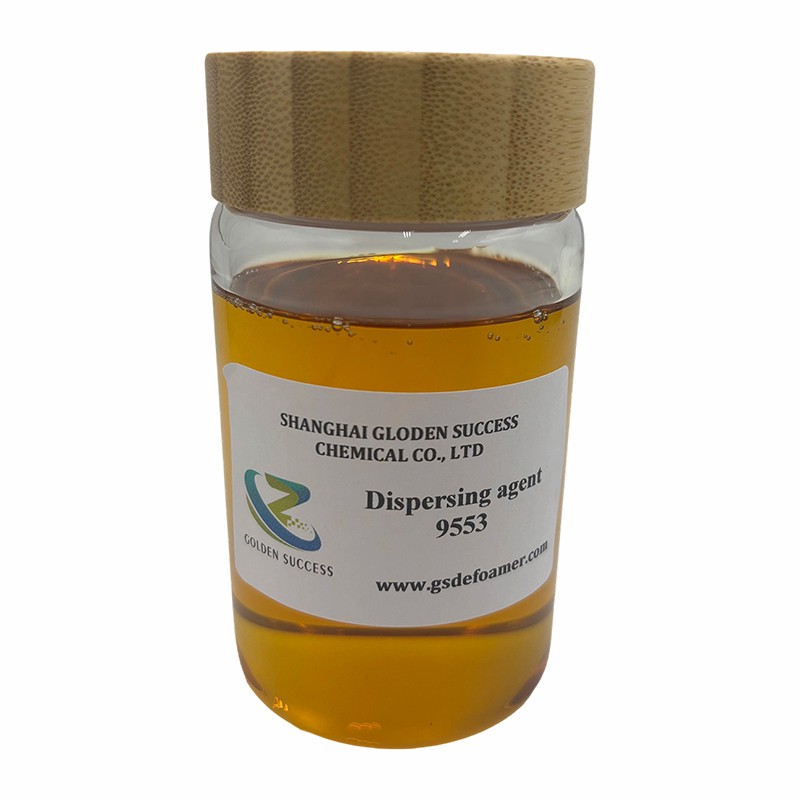
So, now that we've established that oil based dispersing agents can be used in 3D printing materials, let's talk about some of the specific types of oil based dispersing agents that are available. At our company, we offer a range of oil based dispersing agents that are specifically designed for use in 3D printing materials. Some of our popular products include Dispersing Agent 9553, Dispersing Agent 9104, and Dispersing Agent 9211.
Dispersing Agent 9553 is a high-performance dispersing agent that is designed to provide excellent dispersion of solid particles in oil based systems. It is particularly effective at dispersing pigments and fillers, and it can improve the flowability and stability of the material. Dispersing Agent 9104 is another popular product that is designed to provide excellent dispersion of carbon black and other conductive particles in oil based systems. It can improve the electrical conductivity of the material, which makes it ideal for applications in the electronics industry. Dispersing Agent 9211 is a versatile dispersing agent that is suitable for use in a wide range of oil based systems. It can provide excellent dispersion of both organic and inorganic particles, and it can improve the flowability and stability of the material.
Of course, when choosing an oil based dispersing agent for use in 3D printing materials, it's important to consider a few factors. First, you need to consider the type of material that you are using. Different materials have different properties, and you need to choose a dispersing agent that is compatible with the material. Second, you need to consider the specific requirements of your application. For example, if you need the material to have a high level of electrical conductivity, you will need to choose a dispersing agent that is specifically designed for this purpose. Finally, you need to consider the cost and availability of the dispersing agent. You want to choose a product that is cost-effective and that is readily available when you need it.
In conclusion, oil based dispersing agents can be a valuable addition to 3D printing materials. They can improve the flowability, mechanical properties, and surface finish of the material, which can enhance the quality and performance of the final product. At our company, we offer a range of high-quality oil based dispersing agents that are specifically designed for use in 3D printing materials. If you're interested in learning more about our products or if you have any questions about using oil based dispersing agents in 3D printing materials, please don't hesitate to contact us. We'd be happy to help you find the right solution for your needs.
References:

- "Handbook of Dispersants and Dispersing Techniques" by John Wiley & Sons
- "3D Printing Materials: Properties, Processes, and Applications" by Elsevier