

Hey there! As an oil-based dispersing agent supplier, I often get asked if these agents can be used in inks. Well, let's dive right into it and explore whether oil-based dispersing agents are a good fit for the ink industry.

Understanding Oil - Based Dispersing Agents
First off, what exactly are oil-based dispersing agents? These are additives that help in breaking down and evenly distributing solid particles, like pigments or fillers, in an oil - based medium. They work by adsorbing onto the surface of the particles, creating a repulsive force that prevents them from clumping together. This ensures a homogeneous mixture, which is super important for consistent product quality.
Why Inks Need Dispersing Agents
Inks are a complex mixture of pigments, solvents, resins, and various additives. The pigments are the key components that give the ink its color. However, pigments tend to agglomerate or clump together due to their high surface energy. When this happens, the ink can become uneven in color, have poor flow properties, and even block the printing equipment.
A good dispersing agent can solve these problems. It helps to wet the pigments, reduce their surface tension, and keep them uniformly dispersed throughout the ink. This results in better color strength, improved transparency, and enhanced stability of the ink.
Can Oil - Based Dispersing Agents Be Used in Inks?
The short answer is yes! Oil-based dispersing agents can absolutely be used in inks, especially in oil-based inks. Here's why:
Compatibility
Oil-based dispersing agents are specifically designed to work in oil - based systems. Since oil-based inks use oil as the main solvent, these dispersing agents have excellent compatibility with the ink components. They can easily dissolve in the oil phase and interact with the pigments to provide effective dispersion.
Performance
Oil-based dispersing agents offer several performance benefits for inks. They can improve the rheological properties of the ink, such as viscosity and thixotropy. This means the ink will flow smoothly during printing and hold its shape well on the printed surface. Additionally, they can enhance the color development of the pigments, making the colors more vibrant and true - to - life.
Stability
Inks need to have good stability over time to ensure consistent printing results. Oil-based dispersing agents help to prevent pigment settling and flocculation, which can occur during storage or transportation. This ensures that the ink remains homogeneous and ready to use whenever it's needed.
Examples of Our Oil - Based Dispersing Agents for Inks
At our company, we have a range of high - quality oil-based dispersing agents that are perfect for inks. Here are a few of them:
- Dispersing Agent 9216: This agent is known for its excellent wetting and dispersing properties. It can quickly break down pigment agglomerates and keep them well - dispersed in oil-based inks. It also helps to improve the gloss and color strength of the ink.
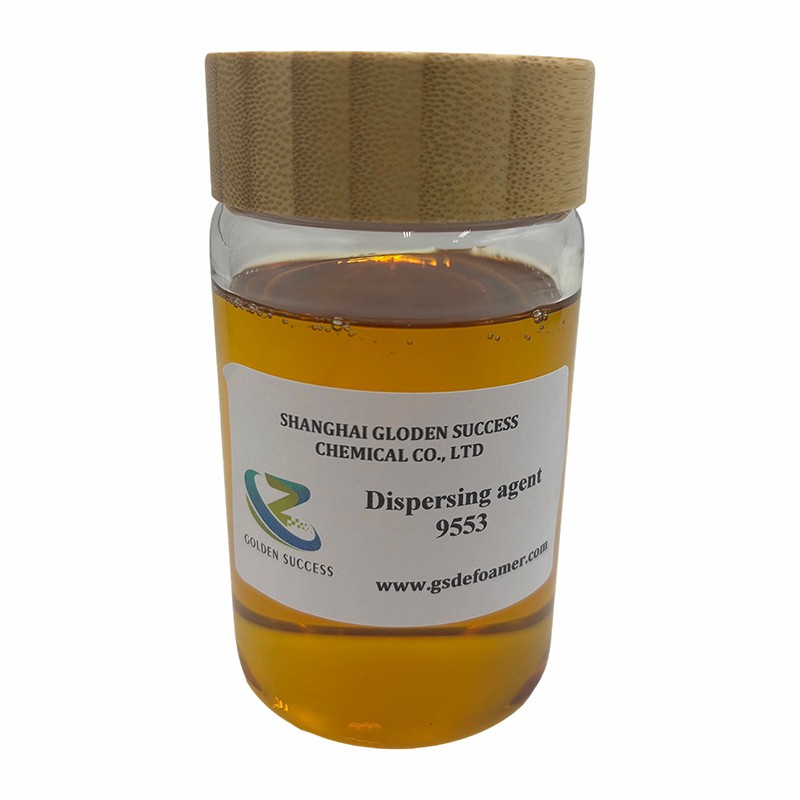
- Dispersing Agent 9553: With a unique chemical structure, this dispersing agent offers superior compatibility with a wide range of oil-based ink systems. It can effectively reduce the viscosity of the ink, making it easier to print and improving the overall printing efficiency.
- Dispersing Agent 9243: This is a versatile dispersing agent that can be used for both organic and inorganic pigments in oil-based inks. It provides long - term stability to the ink, preventing pigment re - agglomeration and ensuring consistent color quality.
Considerations When Using Oil - Based Dispersing Agents in Inks
While oil-based dispersing agents are a great choice for inks, there are a few things to keep in mind:
Dosage
The amount of dispersing agent used is crucial. Using too little may not provide sufficient dispersion, while using too much can lead to issues like increased viscosity, reduced drying time, and even compatibility problems with other ink components. It's important to follow the manufacturer's recommendations and conduct some small - scale tests to determine the optimal dosage.
Compatibility with Other Additives
Inks often contain other additives, such as drying agents, anti - foaming agents, and adhesion promoters. It's important to ensure that the oil-based dispersing agent is compatible with these other additives. Incompatible additives can cause problems like phase separation, reduced performance, and even damage to the printing equipment.
Environmental and Health Considerations
As with any chemicals, it's important to consider the environmental and health impacts of using oil-based dispersing agents in inks. Some oil - based solvents and additives may be volatile organic compounds (VOCs), which can contribute to air pollution. It's important to choose dispersing agents that are low in VOCs or comply with environmental regulations.
Conclusion
So, to sum it up, oil-based dispersing agents can definitely be used in inks, especially in oil-based ink systems. They offer excellent compatibility, performance, and stability, making them a valuable addition to the ink formulation. At our company, we're committed to providing high - quality oil-based dispersing agents like Dispersing Agent 9216, Dispersing Agent 9553, and Dispersing Agent 9243 that can meet the diverse needs of the ink industry.
If you're in the ink business and looking for a reliable supplier of oil-based dispersing agents, don't hesitate to reach out to us. We'd be more than happy to discuss your specific requirements and help you find the perfect dispersing agent for your inks. Let's work together to create high - quality, consistent inks that stand out in the market!
References
- "The Chemistry of Inks and Printing" - A comprehensive book on the chemistry behind ink formulation and the role of additives.
- "Dispersing Agents in Coatings and Inks" - A technical paper that discusses the use of dispersing agents in various applications, including inks.